Medical Pedicure vs. Traditional Pedicure: Key Differences, Techniques, and Career Opportunities
Foot care is one of the fastest growing areas of the beauty and wellness industry. Clients no longer want a pedicure that only looks good. They want a service that keeps their feet healthy, comfortable and safe. That shift has made the conversation around Medical Pedicure vs Traditional Pedicure more important than ever, both for clients choosing a service and for students choosing a career path.
In this guide, we break down what makes each service different, the techniques and tools involved, the hygiene standards that protect clients, and the skills you need to build a career in advanced foot care. If you are thinking about medical pedicure training, this article will help you understand where to start, including the Certified Master Pedicure Program at Passion Beauty Academy.
What Is a Medical Pedicure?
A medical pedicure is a cosmetic foot care service performed by a professional who has received specialized training in foot anatomy, skin and nail conditions, infection control and client risk screening. It goes beyond polish and relaxation. The focus is on the health of the skin and nails, and on recognizing when a client needs to be referred to a doctor or podiatrist.
It is important to understand that a medical pedicure is not a medical treatment. A trained pedicurist does not diagnose or treat disease. Instead, the service stays within the scope of cosmetic care while using clinical level hygiene, careful observation and gentle techniques. Common concerns addressed include thickened nails, calluses, dry and cracked heels, ingrown nail edges and general foot comfort.
Many clients seek this service because they have sensitive skin, need extra care with their feet, or simply want a more thorough and hygienic experience than a standard salon visit.
Medical Pedicure vs. Traditional Pedicure: Key Differences
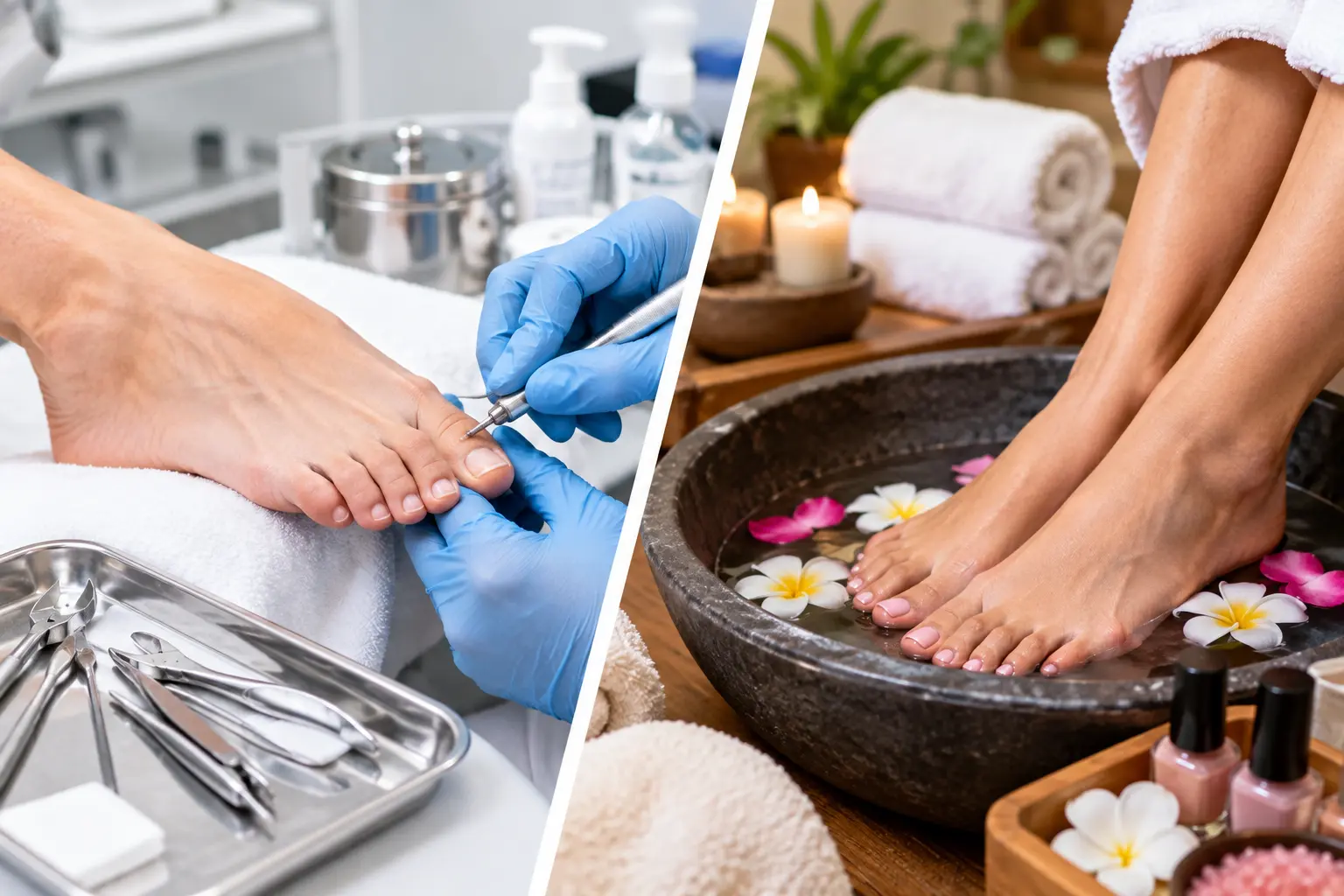
Both services involve nail shaping, cuticle care, exfoliation and moisturizing. The difference lies in the depth of training, the tools, the approach to safety and the purpose of the service. Here is how Medical Pedicure vs Traditional Pedicure compares.
Purpose
A traditional pedicure is mainly about relaxation and appearance. It focuses on polished nails, soft skin and a pleasant spa experience. A medical pedicure puts foot health first, with appearance as a natural result of good care.
Client Assessment
Before a medical pedicure begins, the practitioner reviews the client’s health history and examines the feet and nails. This helps identify risks such as poor circulation, sensitivity, or signs of infection. A traditional pedicure usually skips this step or keeps it very brief.
Tools and Sanitation
Medical pedicures rely on sterilized or single use instruments and strict disinfection protocols. Traditional pedicures often use basin soaks and shared tools that are disinfected between clients but may not be sterilized.
Techniques
Traditional services typically use soaking, filing and standard cuticle work. Medical pedicures often use dry techniques, precise nail reduction and controlled callus smoothing, all designed to reduce the risk of irritation or injury.
Training Level
A basic nail technician program may cover pedicures in a single module. Advanced pedicure training goes much deeper into anatomy, skin and nail conditions, safety and client communication.
Techniques and Equipment Used in Medical Pedicures
A well trained practitioner uses a combination of careful technique and the right equipment to deliver safe and effective results. While specific methods vary by program and practice, the following are commonly taught in a quality medical pedicure course.
- Foot and nail assessment: Checking skin tone, texture, nail shape and any areas of concern before starting.
- Dry or minimal moisture techniques: Reducing reliance on long water soaks, which can soften skin too much and increase the risk of injury.
- Electric nail files and burs: Used with care to reduce thickened nails and smooth callused areas with control.
- Sterilized implements: Nippers, curettes, pushers and files that are cleaned and sterilized in an autoclave or replaced after each use.
- Dust and debris control: Extraction or protective equipment to keep the workspace clean and safe.
- Therapeutic moisturizing and massage: Hydrating products and gentle massage to support comfort and skin health.
- Client education: Advising on home care, footwear and when to see a healthcare provider.
Hygiene, Foot Care, and Client Safety
Safety is the foundation of every medical pedicure. Feet are exposed to bacteria, fungi and moisture, and small cuts can lead to bigger problems if hygiene is neglected. This is why infection control is one of the most heavily emphasized topics in medical pedicure certification programs.
Key safety practices include:
- Cleaning and disinfecting the workstation before and after every client.
- Sterilizing reusable metal tools and discarding single use items such as files and buffers.
- Wearing gloves and following proper hand hygiene.
- Reviewing client health information and respecting situations where a service should be postponed.
- Recognizing signs that call for a referral, such as unusual discoloration, persistent pain, open sores or suspected infection.
- Never attempting to diagnose or treat medical conditions.
Clients who live with diabetes, circulation concerns or reduced sensation need especially careful handling. A trained professional knows how to adapt the service, or when to say that a client should see a doctor first.
Skills Needed to Become a Certified Master Pedicurist
A certified master pedicurist combines technical skill with sound judgment and strong people skills. If you want to move beyond standard salon services, these are the abilities to develop.
- Knowledge of foot anatomy and nail structure: Understanding bones, skin layers, nail growth and common conditions.
- Infection control expertise: Applying sterilization and disinfection standards without shortcuts.
- Precision and steady hands: Working safely with fine tools and electric equipment.
- Observation skills: Noticing changes in skin and nails that may need professional medical attention.
- Communication and empathy: Explaining services clearly and making clients feel comfortable and respected.
- Professionalism and ethics: Staying within your scope of practice and keeping accurate client records.
- Business awareness: Pricing services, building client loyalty and marketing your expertise.
The Certified Master Pedicure Program at Passion Beauty Academy is built around this advanced level of training. Over four intensive days, participants move from foundational pedicure skills to advanced European-style techniques, with theory, demonstrations and hands-on practice on mannequins and live models, plus exposure to medical pedicure training for safe, effective client care. For a step by step look at the path, read our guide on how to become a certified master pedicurist.
If you are just starting out, the Pedicure Certificate Program is a strong first step. It covers sanitization and sterilization, foot anatomy, foot disorders and diseases, pedicure protocols and supervised hands-on practice with real clients.
Students who already hold a background in esthetics or skin care often find it easier to build on these skills. Programs such as the Medical Aesthetics Diploma and the Skin Care Therapist Diploma at Passion Beauty Academy provide a strong foundation in skin health, client care and professional standards.
How to Choose a Medical Pedicure Training Program
Not every program is equal, so it pays to compare your options carefully. Whether you are searching for a medical pedicure school or looking for pedicure certification in Mississauga, use this checklist.
- Check the curriculum. Look for anatomy, skin and nail conditions, infection control, tool handling and client assessment.
- Look for hands-on practice. Real client style training builds confidence far faster than theory alone.
- Review instructor experience. Experienced industry professionals bring practical insight that textbooks cannot.
- Confirm credentials. Ask what certificate you will receive and whether the school is a registered private career college in Ontario.
- Ask about equipment. Students should train with professional grade tools and sterilization equipment.
- Understand costs and financial support. Ask about payment options and whether funding such as OSAP may apply. You can learn more on our financial aid page.
- Consider location and schedule. A campus close to home, such as one in Mississauga, makes consistent attendance easier.
- Talk to admissions. A good school will answer your questions openly. You can review the admission process or contact our team to ask about current program offerings.
Passion Beauty Academy is a hair and beauty school in Mississauga with hands-on diploma and certificate options. If you want advanced foot care skills, start with the Certified Master Pedicure Program. If you are new to nail care, you can build your foundation first with the Pedicure Certificate Program, offered at our Mississauga campus alongside our other aesthetic certificates. You can also explore our diploma programs and learn more about us.
Career Opportunities After Medical Pedicure Training
Completing medical pedicure training, such as the Certified Master Pedicure Program, opens the door to a range of roles. Demand for skilled foot care professionals continues to grow as people become more aware of the link between foot health and overall wellbeing.
- Medical pedicurist in a spa or clinic: Offer specialized foot care services in wellness centres, medical spas and aesthetic clinics.
- Advanced nail technician: Set yourself apart in a salon by offering premium services that many technicians cannot provide.
- Mobile foot care provider: Visit clients at home, including seniors who prefer comfort and convenience.
- Salon or studio owner: Build a foot care focused business with a clear specialty.
- Educator or trainer: Share your expertise with new students once you have industry experience.
- Collaborator with health professionals: Build referral relationships with podiatrists, family doctors and other providers.
If you are curious about related paths, take a look at our Medical Spa Therapist Diploma or our Salon and Spa page to see how our community works with clients.
Frequently Asked Questions
What is the main difference between a medical pedicure and a traditional pedicure?
The main difference in Medical Pedicure vs Traditional Pedicure is the focus. A traditional pedicure centres on relaxation and polish, while a medical pedicure prioritizes foot health, client assessment, strict hygiene and specialized techniques.
Is a medical pedicure performed by a doctor?
No. It is a cosmetic service performed by a trained pedicurist. The practitioner does not diagnose or treat medical conditions, but is trained to recognize when a client should be referred to a healthcare professional.
What does a medical pedicure course cover?
A good medical pedicure course typically covers foot anatomy, common skin and nail concerns, infection control, tool use, client consultation and professional ethics. Content varies by school, so always review the curriculum before enrolling.
Do I need experience before starting medical pedicure training?
Requirements differ by program. Some are open to beginners, while others prefer students with a background in nail care or esthetics. At Passion Beauty Academy, the Pedicure Certificate Program does not require prior experience, so it works well for beginners. Contact the school directly to confirm entry requirements for other programs.
How long does medical pedicure certification take?
Medical pedicure certification length depends on the program and the number of training hours. Certificate programs are generally shorter than full diplomas. At Passion Beauty Academy, the Certified Master Pedicure Program runs over four intensive days. Contact the school for current schedule details.
Where can I find pedicure certification in Mississauga?
Passion Beauty Academy offers advanced pedicure training through the Certified Master Pedicure Program and the foundational Pedicure Certificate Program at its Mississauga campus. You can contact our team to ask which option suits your goals and when the next session starts.
Is advanced pedicure training worth it?
For many professionals, yes. Advanced pedicure training allows you to offer higher value services, attract clients who need extra care and stand out in a competitive market.
Final Thoughts
Understanding Medical Pedicure vs Traditional Pedicure helps both clients and future professionals make better choices. A medical pedicure raises the standard of care with deeper training, stricter hygiene and a focus on foot health. For students, it is a path toward becoming a respected certified master pedicurist with real career options.
Ready to take the next step in your beauty career? Explore the Certified Master Pedicure Program at Passion Beauty Academy, browse more tips on our blog, or get in touch with our admissions team today.