Why Toronto's Laser Boom Is Outpacing the People Trained to Handle It
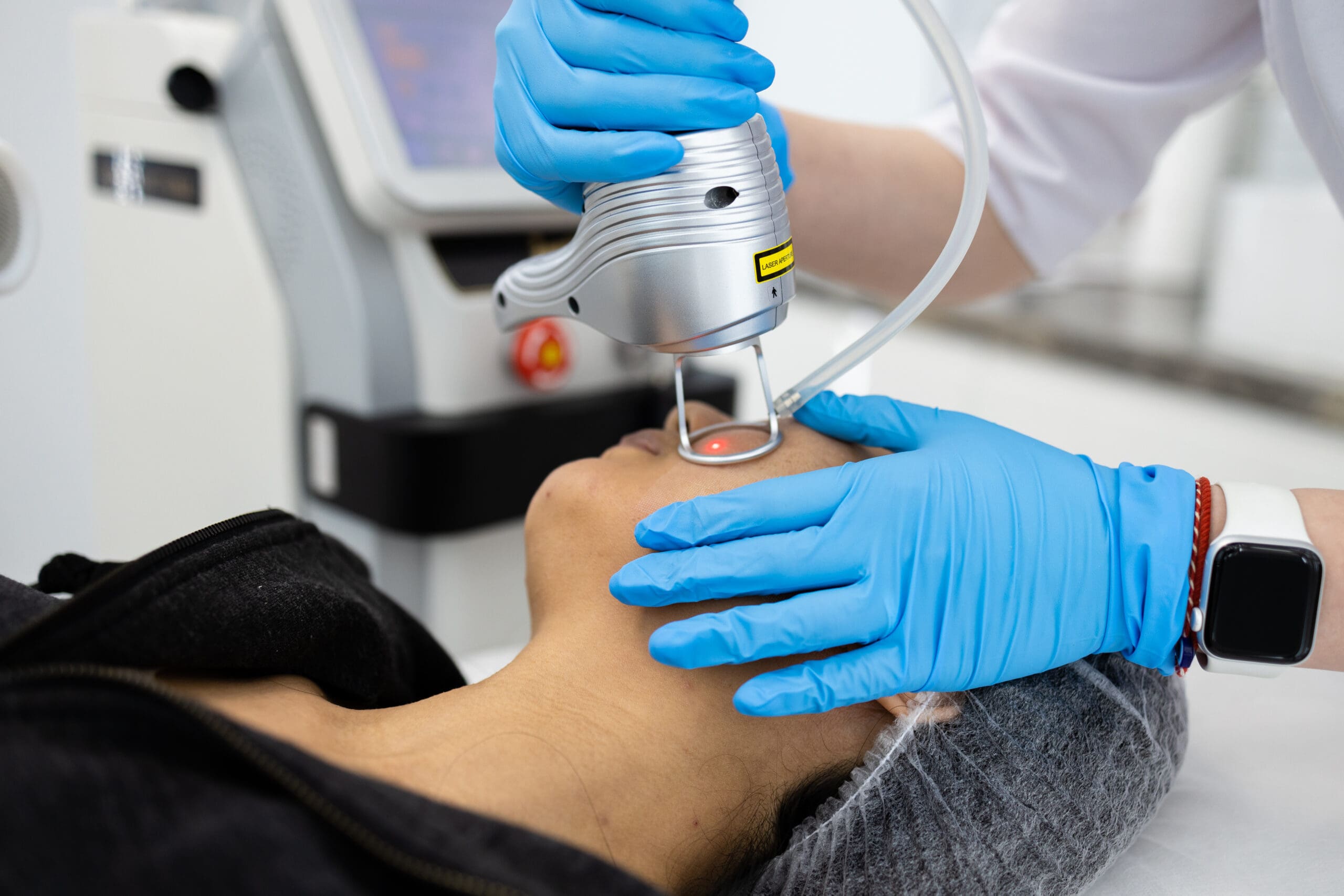
Walk into almost any medical spa or aesthetic clinic along Yonge Street, in the Distillery District, or tucked into one of the GTA's many mixed-use developments, and there is a good chance laser services are on the menu. Laser hair removal. Skin resurfacing. Pigmentation correction. Vascular treatments. The list has grown steadily, and so has the volume of clients walking in to book them. What has not kept pace, at least not consistently, is the supply of practitioners who actually know what they are doing with the equipment.
That gap is not a marketing angle. It is a practical reality that clinic owners in Toronto will tell you about if you ask the right questions. Finding a qualified laser technician that Toronto clinics can depend on — someone with real hands-on competency in the technology who understands the science behind the device, reads skin correctly, and manages the full arc of a treatment from intake to follow-up — remains harder than the number of job postings might suggest.
Toronto's Population Is Not a Backdrop. It's Part of the Clinical Picture.
Toronto consistently ranks among the most ethnically diverse cities in the world. That fact has direct clinical relevance for anyone working with laser technology, particularly around Fitzpatrick skin type laser compatibility. Laser and light-based treatments interact with skin differently depending on melanin concentration. The Fitzpatrick scale, which practitioners use to classify skin tone and predict how skin will respond to laser energy, spans from Type I through Type VI, and Toronto's client base covers that entire range on any given day in a busy clinic.
This matters because laser settings that are appropriate and safe for one Fitzpatrick type can cause burns, post-inflammatory hyperpigmentation, or permanent discoloration on another. Operators who have only been trained on a narrow range of skin types, or who have learned to run a device without understanding why those settings exist, are working with a significant blind spot. In a city with Toronto's demographic range, that blind spot is not theoretical. It will show up.
Skilled laser technicians know how to adjust. They understand the relationship between wavelength, pulse duration, fluence, and skin response. They recognize contraindications before they become complications. They are not running through a script. They are making clinical decisions in real time, and the diversity of Toronto's population makes that capacity not just valuable but necessary.
The Regulatory Environment Has Teeth
Ontario takes the regulation of laser and energy-based devices seriously, and that framework has tightened over time. Certain laser procedures are classified as controlled acts, meaning they require physician oversight or proper delegation, and clinics operating without that structure in place expose themselves and their clients to real risk. The College of Physicians and Surgeons of Ontario provides guidance on how these procedures should be supervised, and clinics that disregard that guidance do not stay in operation without consequence.
For practitioners, this means the path into laser work is not a shortcut. Proper certification, a clear understanding of what falls within scope, and the ability to function within a medically supervised environment are baseline requirements in any reputable clinic. A technician who has completed a credible cosmetic laser technician course understands this structure and can work within it confidently. Someone who attended a weekend course and received a certificate has a very different relationship with those same standards.
This matters for career longevity as much as for client safety. Clinics that operate above board are the ones with staying power in Toronto's competitive market. Those are also the clinics that pay better, carry stronger reputations, and offer practitioners a stable professional environment. Getting in the door requires actual credentials, not a reasonable facsimile of them.
What the Work Requires Day to Day
Laser technology work is not monotonous, but it is consistently technical. A practitioner might move through several different treatment types in a single shift, each requiring different device settings, different pre-treatment assessments, and different client communication. Hair removal on a client with a darker skin tone requires a different approach than the same procedure on someone with light skin and coarse hair. A skin resurfacing session for someone with active acne scarring involves different considerations than one focused on general texture improvement.
Pre-treatment consultations are where a significant portion of the work happens, and where a skilled technician separates from an undertrained one. Reviewing a client's history, identifying any medications that increase photosensitivity, assessing recent sun exposure, patch testing when appropriate, and setting realistic outcome expectations are all part of the process before the device is ever activated. Clients who have had poor experiences elsewhere often arrive carrying a combination of skepticism and hope, and managing that conversation clearly and honestly is as much a part of the job as the technical execution.
Post-treatment care instructions also fall within the technician's responsibility. A client who leaves without understanding what to expect, what to avoid, and when to call if something seems off is a liability for the clinic and a disservice to themselves. The technician who handled their treatment owns that follow-through.
Why the Demand Has Not Softened
The volume of laser services being performed in Toronto has not decreased. Consumer awareness of what these treatments can do has grown considerably, driven partly by social media and partly by the straightforward fact that results, when delivered correctly, are visible and lasting. Hair removal remains the most requested laser service in virtually every aesthetic clinic in the city. But demand has expanded well beyond that into treatment areas requiring an even higher level of technical competency.
Tattoo removal has grown. Skin rejuvenation treatments that address sun damage, fine lines, and uneven tone are now standard offerings in full-service clinics. Fractional laser resurfacing, once confined to dermatology offices, has moved into the medical spa environment. Each of these services requires a medical spa laser technician trained for that specific modality, not someone who has crossed over from a different treatment without additional preparation.
Clinics are also getting more selective. The days of a clinic hiring anyone willing to learn on the job are behind the better-run operations in Toronto. What they want are practitioners who arrive with a foundation that the clinic does not have to build from scratch. That foundation comes from the best laser technician course in GTA, one that is structured, hands-on, and delivered by people who understand both the clinical and the practical sides of the work.
What Proper Training Actually Changes
The difference between a trained laser technician and an undertrained one is not always visible from the outside in the first few sessions. It shows up over time. It shows up in how a technician handles a client whose skin reacts unexpectedly. It shows up in whether they recognize when a treatment plan needs to be adjusted rather than pushed forward on schedule. It shows up in whether they have ever been in a clinical environment where something went sideways and watched how a competent practitioner managed it.
Training built around real clinical exposure, not just demonstrations, produces practitioners who carry some of that experience before they ever enter a professional setting on their own. The distance between someone who has completed rigorous hands-on preparation and someone who has not is not a subtle one. Clinics notice it quickly, and so do clients over the course of a treatment series.
There is also the matter of confidence, which is different from certainty. A properly trained technician knows the boundaries of what they can and cannot do, and they do not guess across those boundaries. That kind of grounded competence is what allows a practitioner to build the kind of client trust that keeps a schedule full. In a city where clients have no shortage of options, trust is what makes them come back.
For Those Considering This Path
Toronto's beauty industry will continue to need skilled laser technicians because the demand for these services is not a trend with a visible end point. What will keep shifting is the standard for what counts as qualified. That bar has been moving upward, and the clinics setting the pace in this city are not waiting for the rest of the industry to catch up.
Passion Beauty Academy, a hair and beauty school in Mississauga with deep roots in professional aesthetics education, offers a Laser Technician Diploma that is a 9-week, 240-hour in-person program built around the full scope of what this work demands. The curriculum covers laser safety and protocols, hair removal, skin resurfacing, tattoo removal, photofacials, and skin tightening, alongside client care and communication. Students also work through medical spa business management, covering the professional and operational side of building a career in this field, reflecting what any credible medical spa school in Mississauga prepares students for. Practical training is conducted with real clients under instructor supervision, so graduates are not stepping into their first professional setting without having already handled real treatment scenarios. Career pathways from the program extend into dermatology clinics, aesthetic laser clinics, medical spas, skin care facilities, and plastic surgeons' offices across the GTA.
Toronto's clinics are hiring. What they are looking for is someone ready to meet them at the level the work demands.