2026 Skin Barrier Trends: What Beauty Professionals Need to Know About Barrier-First Skincare
The skin barrier isn’t a new concept but in 2026, it has moved from background theory to the single most important framework guiding professional skincare decisions. Clients are arriving at clinics and spas better informed than ever, asking specifically about skin barrier health, demanding gentler protocols, and questioning treatments that disrupt before they restore. As a beauty professional, understanding the science, the trends, and the treatment landscape around the skin barrier is no longer optional; it is the foundation of credible, effective practice.
This guide breaks down the key 2026 trends in barrier-first skincare, explains what they mean at the treatment table, and shows how professional education is evolving to equip practitioners with the advanced skincare techniques that today’s clients expect.
What Is the Skin Barrier and Why Does It Matter More Than Ever?
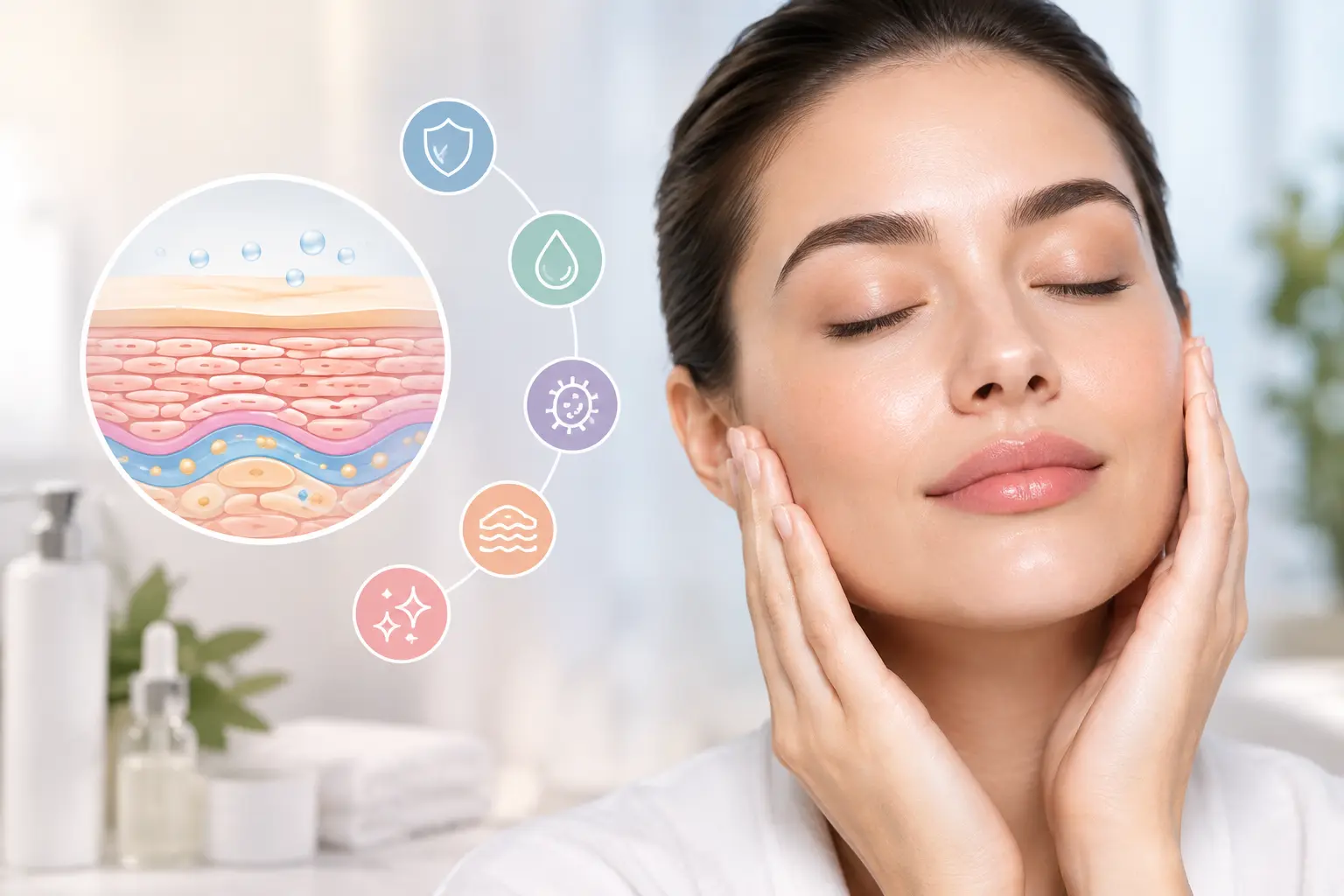
The skin barrier technically known as the stratum corneum is the outermost layer of the epidermis. It functions as the body’s first physical and chemical defence system, controlling transepidermal water loss (TEWL), regulating moisture, and protecting against environmental aggressors like UV radiation, pollutants, and pathogens.
Healthy skin barrier function depends on an intact lipid matrix, balanced ceramide levels, and a maintained acid mantle with an optimal pH between 4.5 and 5.5. When this system is compromised through over-exfoliation, harsh activities, environmental stress, or chronic inflammation clients experience dryness, sensitivity, redness, breakouts, and accelerated aging.
Key signs of a damaged skin barrier include:
- Persistent tightness, flaking, or rough texture
- Stinging or burning when applying even gentle products
- Redness, blotchiness, or increased sensitivity to temperature
- Breakouts that appear despite a consistent skincare routine
- Products that previously worked suddenly causing reactions
- Accelerated dehydration and loss of plumpness
In clinical practice, the prevalence of damaged skin barrier presentations has surged. Dermatologists and aestheticians alike report a significant uptick in clients with compromised barriers — many of whom over-treated at home during the active-ingredient skincare boom of the early 2020s. The 2026 professional landscape is, in large part, a corrective response to that era.
The 6 Defining Skin Barrier Trends of 2026
These are the movements reshaping how professional skincare is delivered, taught, and marketed this year:
1. Barrier Assessment Before Every Treatment
Structured consultation protocols now include formal barrier assessment checking TEWL, pH, hydration levels, and sensitivity history before any active treatment is performed. This is no longer considered optional due diligence; it is the expected standard of care in high-performing clinics and medical spas.
2. Microbiome-Barrier Co-Treatment
The relationship between the skin microbiome and barrier integrity is guiding new probiotic and prebiotic treatment layers, incorporated alongside traditional barrier repair products. Research confirming that microbial imbalance directly impacts barrier permeability has pushed this from niche interest to mainstream clinical application.
3. Rest-Phase Protocols
Clinicians are building deliberate rest phases into multi-visit treatment plans periods of pure barrier restoration between active treatments like chemical peels or laser sessions. This approach acknowledges that consecutive aggressive treatments without recovery windows undermine long-term results.
4. Ceramide-Centric Formulation
Professional-grade treatment products are being reformulated with ceramide 1, 3, and 6-II complexes to directly replenish the lipid matrix depleted by aggressive treatments. Ceramide ratios that mirror the skin’s natural composition are now a key differentiator in professional product lines.
5. Gentle Active Delivery Systems
Encapsulation technology now allows retinoids, AHAs, and niacinamide to be delivered at lower irritation levels making activities compatible with barrier-first approaches. Time-release and pH-buffered formulations are increasingly standard in professional skin barrier skincare protocols.
6. Client Education as Treatment
Professionals are spending more consultation time educating clients about at-home barrier support positioning this as part of the overall treatment outcome rather than an afterthought. Clients who understand the science behind barrier health become more compliant, more trusting, and more loyal.
Each of these trends requires practitioners to hold a deeper understanding of skin physiology than surface-level product training provides. This is precisely why formal education in medical aesthetics skincare has become the differentiator between competent and exceptional practitioners.
Barrier-First Skincare: A Framework, Not a Product Category
Barrier-first skincare is a clinical philosophy before it is a retail trend. At its core, it means every professional skincare decision from consultation through treatment selection, product application, and homecare recommendation is filtered through one guiding question: will this support or compromise the skin barrier?
In practical terms, adopting a barrier-first framework means:
- Slowing down the treatment ladder. Not every client presenting with hyperpigmentation or uneven texture is ready for a chemical peel. A compromised barrier must be restored before any corrective treatment is introduced.
- Choosing ingredients that repair alongside activities. Pairing exfoliating acids with panthenol, hyaluronic acid, and ceramides reduces the inflammatory cascade associated with aggressive exfoliation.
- Using modality-appropriate protocols. Laser and light-based treatments require pre- and post-treatment barrier support to reduce downtime and enhance outcomes.
- Monitoring and responding to barrier signals. Erythema, TEWL changes, and sensitivity shifts mid-treatment plan should trigger protocol adjustments, not patient dismissal.
Practitioners trained in medical aesthetics at the diploma level learn these frameworks through structured curricula that integrate skin science theory with supervised hands-on application exactly the depth required to apply barrier-first thinking responsibly.
Professional Skin Barrier Treatments Trending in 2026
The treatment menu in aesthetic clinics and medical spas has evolved considerably. The most in-demand skin barrier treatments in 2026 include:
Barrier Restoration Facials
These are structured as multi-phase treatments: gentle enzymatic cleansing, hydration infusion (often via iontophoresis or oxygen infusion devices), ceramide-rich mask application, and occlusive finishing. They are increasingly prescribed as a preparatory step before any corrective procedure series.
Biome-Balancing Treatments
Drawing on microbiome research, these protocols use pre- and probiotic-infused serums applied post-cleanse to support microbial diversity. When combined with LED therapy particularly red and near-infrared wavelengths they show strong results in reducing inflammatory sensitisation and improving long-term barrier resilience.
Low-pH Peel Protocols with Barrier Recovery Phases
The era of aggressive multi-acid peels is giving way to pH-staged exfoliation protocols where the strength of the peel is calibrated to the current barrier integrity score at each visit. Post-peel, a full barrier recovery phase using ceramide serums and peptide-rich emollients is standard practice rather than optional.
Hydration Boosting with Skin Needling
Microneedling channels are increasingly used as delivery vehicles for barrier-supporting activities hyaluronic acid, growth factors, and ceramide complexes rather than just as collagen stimulators. This dual-action approach enhances both structural collagen production and barrier resilience simultaneously.
Laser Pre- and Post-Conditioning Programs
Medical spas and aesthetic clinics now routinely build 4–6 week barrier conditioning programs before ablative or fractional laser treatments. This reduces adverse reactions, shortens recovery, and produces more consistent long-term results for clients undergoing resurfacing procedures.
All five of these skin barrier treatments require both theoretical fluency and hands-on skill. Practitioners without formal training in paramedical skin care, laser modalities, and treatment planning are at a significant disadvantage when clients present with complex skin histories which in 2026, most do.
The Science Behind Skin Barrier Repair
Understanding skin barrier repair at a biochemical level is what separates a practitioner who follows a product system from one who truly adapts care to the individual client. Here are the mechanisms professionals need to be fluent in:
Ceramide Replenishment
Ceramides make up approximately 50% of the lipid matrix of the stratum corneum. A depleted ceramide profile common in atopic skin, sensitised skin, and post-treatment skin leads directly to increased permeability and moisture loss. Professional skin barrier skincare products now frequently list ceramide 1 (EOS), ceramide 3 (NP), and ceramide 6-II (AP) as priority activities for barrier restoration.
NMF (Natural Moisturising Factor) Support
NMF is the collection of water-binding compounds including amino acids, urocanic acid, PCA, and hyaluronic acid that keep the stratum corneum hydrated and supple. When the barrier is disrupted, NMF levels drop. Supporting NMF through professional humectant treatments and appropriate occlusion is fundamental to skin barrier repair.
Acid Mantle Restoration
The slightly acidic pH of healthy skin (4.5–5.5) is maintained by sweat, sebum, and microbial activity. Alkaline cleansers, high-pH treatments, and aggressive surfactants disrupt this, creating an environment where pathogenic bacteria thrive and barrier lipids cannot self-assemble correctly. Restoring acid mantle pH is a non-negotiable first step in any barrier recovery protocol.
Filaggrin and Structural Protein Support
Filaggrin is the protein primarily responsible for forming a tight junction network within the stratum corneum. Filaggrin deficiency genetic or acquired is a major driver of atopic dermatitis and chronic barrier compromise. Emerging professional treatment protocols incorporating topical niacinamide and certain peptides have shown efficacy in supporting filaggrin synthesis and long-term skin barrier health.
Advanced Skincare Techniques Every Beauty Professional Should Master in 2026
The demand for sophisticated advanced skincare techniques is at an all-time high. The barrier-first trend requires practitioners to expand their skill sets in the following directions:
- Comprehensive Skin Analysis. Moving beyond Fitzpatrick typing to incorporate Glogau scale assessment, TEWL measurement, and barrier integrity mapping before every treatment series. This forms the clinical basis for all subsequent protocol decisions.
- Chemical Peel Titration. Understanding how to modulate peel strength, acid concentration, and pH based on real-time skin response rather than protocol templates. This is an advanced skill requiring supervised clinical practice and a thorough grasp of skin barrier function under stress.
- Device-Assisted Barrier Treatment. Proficiency with LED photobiomodulation, iontophoresis, and ultrasonic infusion devices that enhance barrier-supporting ingredient penetration without disrupting the barrier itself.
- Laser Pre- and Post-Protocol Design. The ability to build and document individualised barrier conditioning and recovery programs around laser and energy-based treatments is a competency now expected in all high-performing aesthetic clinics.
- Client Education and Compliance Support. Structuring at-home barrier support regimes that clients can actually follow, with clear ingredient guidance, product selection rationale, and follow-up checkpoints built into the treatment plan.
These competencies are taught progressively through professional skin care diploma programs and medical aesthetician diplomas that integrate clinical theory with practical application, the only reliable pathway to developing genuine expertise in these areas.
Medical Aesthetics Skincare: Where the Barrier Trend Meets Clinical Practice
The convergence of barrier science and medical aesthetics is one of the defining developments in professional skincare in 2026. Medical aesthetics skincare is no longer simply about performing treatments it is about integrating skin health science into every stage of the client journey.
In practice, this means:
- Pre-treatment consultations that include barrier assessment alongside contraindication screening
- Treatment protocols designed to deliver results without compromising the barrier as a side effect
- Post-treatment recovery programs with structured barrier restoration phases
- Product recommendation strategies anchored in skin biology rather than brand preference
- Ongoing client education that builds long-term skin literacy and improves compliance
Clinics and spas that have adopted this model report higher client retention, fewer adverse event presentations, and stronger word-of-mouth referrals. For practitioners, it also means greater confidence and clinical credibility particularly when working alongside dermatologists, plastic surgeons, and medical doctors in multi-disciplinary settings.
Clients in 2026 are also arriving with more specific questions than ever before: asking whether you can assess their skin barrier before proceeding, whether a treatment is safe for compromised or reactive skin, and how to simplify an overloaded routine without losing progress. These questions require informed, science-backed answers and the practitioners who deliver them are those who have invested in structured training that goes beyond product knowledge.
How to Build Barrier-First Skincare Into Your Professional Practice
If you are a working aesthetician or beauty professional looking to integrate the barrier-first approach into your existing practice, here is a practical roadmap:
Step 1: Audit Your Current Protocols
Review your existing treatment menus and assess each service for its barrier impact. Identify any treatments that are routinely applied without barrier assessment, and consider where rest or restoration phases could be added between active sessions.
Step 2: Invest in Skin Analysis Tools
Skin analysis devices that measure TEWL, hydration, and sebum levels are increasingly affordable and provide the objective baseline data needed to justify a barrier-first approach to clients. Even basic corneometry adds significant clinical credibility to your consultations.
Step 3: Review Your Product Range
Evaluate your professional products for barrier-supportive ingredients: ceramides, cholesterol, fatty acids, panthenol, niacinamide, and beta-glucan. Identify any gaps and build a dedicated barrier restoration line into your back bar for use in pre- and post-treatment phases.
Step 4: Upskill Through Formal Training
Product training and brand workshops are valuable, but they cannot replace the depth of understanding that comes from formal clinical education. If you are serious about practising at the leading edge of the barrier trend, structured programs in medical aesthetics or advanced skin care provide the physiological and clinical foundation that brand education alone cannot offer.
Step 5: Educate Your Clients Proactively
Begin incorporating barrier education into every consultation. Use clear explanations of why barrier integrity affects every treatment outcome and how clients can support their skin at home. Clients who understand the science become advocates and they return consistently.
Why Education Is the Foundation of Barrier-First Practice
The skin barrier trend is not a passing moment in the product cycle. It reflects a deeper, permanent shift in how the professional beauty and aesthetic industry understands skin health: a shift from a treatment-first, correct-and-correct-again model to a preserve-first, enhance-carefully approach.
Keeping pace with this shift requires more than reading product literature or attending weekend workshops. It requires a grounded understanding of skin anatomy, physiology, inflammatory pathways, ingredient chemistry, and treatment modality science the kind of understanding built through comprehensive, supervised training.
At Passion Beauty Academy in Mississauga, programs like the Medical Aesthetician Diploma and the Skin Care Therapist Diploma are designed to build exactly this kind of depth. Students graduate not just as skilled technicians, but as informed practitioners capable of making evidence-informed clinical decisions including the decision to protect a client’s skin barrier above all else.
The curriculum covers advanced skin care techniques, paramedical skin care, skin analysis and consultations, chemical peels, anti-aging protocols, and laser and light therapies all of the areas where barrier competency is now the baseline standard of professional skincare excellence.
Whether you are entering the industry for the first time or looking to deepen your existing practice, formal training remains the most reliable investment you can make in a career that is increasingly defined by clinical credibility and skin science knowledge. Explore your options at Passion Beauty Academy and take the next step toward becoming the barrier-first professional your clients are looking for.