What Advanced Skin Care in Toronto Actually Demands — And Why Training Still Matters
Toronto has never been short on people who want to look after their skin. What has changed is the level of sophistication they bring to that goal. A client walking into a clinic or spa today is not simply looking for a facial. She may have already researched her Fitzpatrick type, watched three videos comparing glycolic and lactic acid, and arrived with specific questions about whether microneedling or a chemical peel makes more sense for the hyperpigmentation she has been dealing with since her second pregnancy. He may have come in for a consultation after noticing that a course of retinoids made things worse before they got better and wanting to understand why.
This is the reality of advanced skin care in Toronto in 2025. The client base has evolved, and the practitioners serving them need to have evolved alongside it.
The City Brings a Particular Set of Skin Concerns
Toronto’s climate does something specific to skin. The winters here are genuinely harsh — cold, dry, and long enough that barrier dysfunction becomes a recurring problem for a significant portion of clients regardless of their baseline skin type. The combination of indoor heating and low outdoor humidity strips moisture faster than most standard retail moisturisers can replace it, and the cumulative effect across a season shows up in the treatment room as compromised skin that is simultaneously dehydrated and sensitised. Layering actives on top of that without understanding what the skin is actually dealing with is a reliable path to irritation.
Then there is the summer counterpart: UV exposure concentrated into a shorter period, higher humidity, heat-triggered breakouts, and post-inflammatory hyperpigmentation that was sitting quietly all winter suddenly becoming visible. Toronto skin cycles through states that do not exist in more temperate climates, and an advanced skin care professional here needs to be thinking seasonally in a way that a practitioner in, say, a consistently warm coastal city may not need to.
Add to this the same demographic reality that makes laser work complex in this city — Toronto’s population spans the full Fitzpatrick scale, meaning melanin-rich skin types are not the exception in a treatment room, they are a regular part of the day. For skin care, this matters enormously. Pigmentation, inflammation response, keloid risk, and product sensitivity all behave differently depending on skin type, and a practitioner who has only ever worked with one or two Fitzpatrick types will eventually encounter a client whose skin they genuinely do not understand.
What “Advanced” Actually Means Here
The term gets used loosely. Clinics describe their menus as advanced. Products position themselves as advanced. But in practice, advanced skin care in Toronto means something specific: it means the ability to assess skin systemically rather than symptomatically, match treatments to skin physiology rather than trends, and execute procedures that require a level of clinical knowledge that not everyone working in aesthetics has actually built.
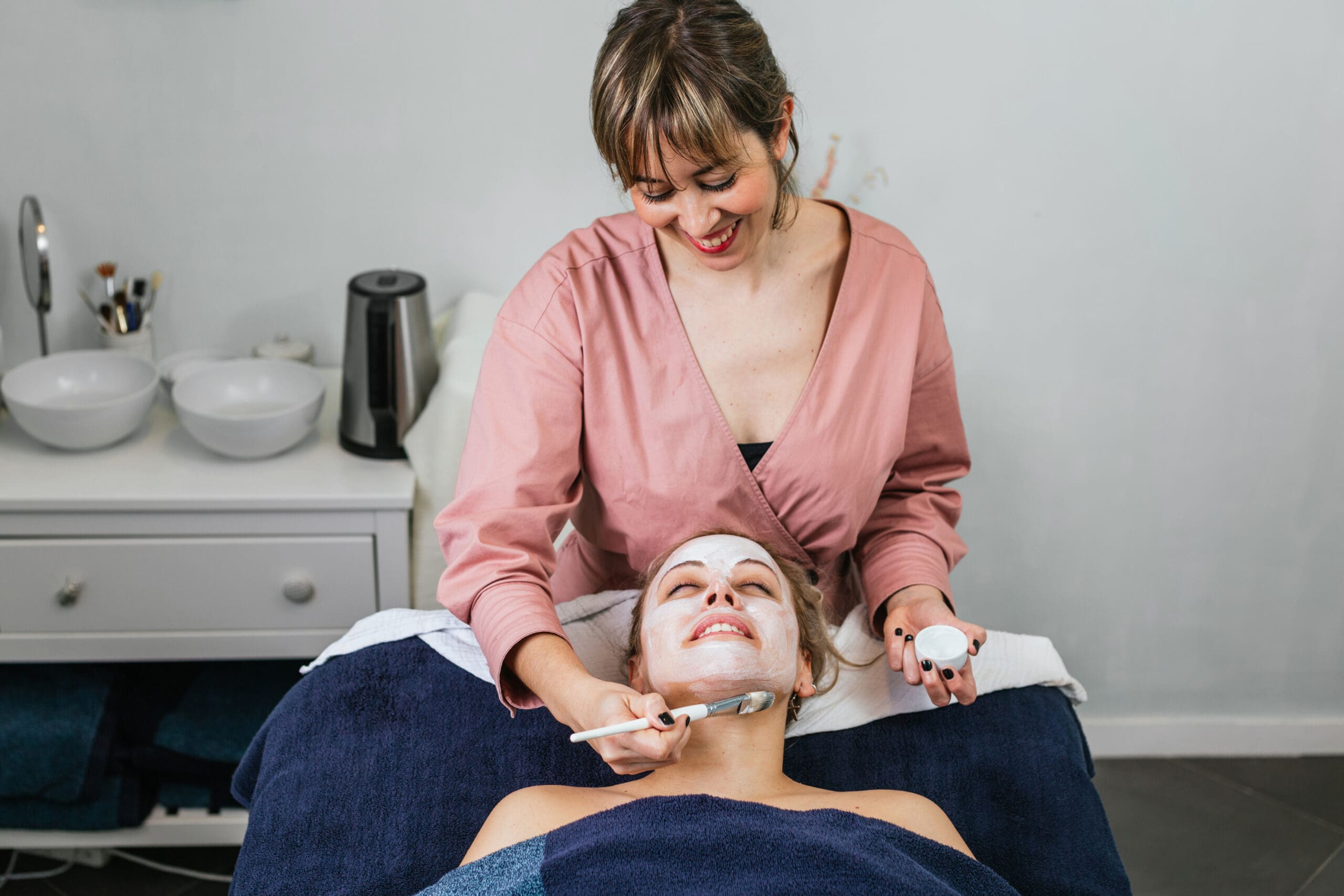
Skin needling, enzyme treatments, LED phototherapy, chemical exfoliation at clinical concentrations, and extractions in cases involving active breakouts or compromised skin — these are not complicated in the hands of someone who understands what they are doing, but they require that understanding. Knowing that an AHA at a certain concentration and pH requires proper timing and neutralisation is not the kind of knowledge that comes from reading product instructions. It comes from training that teaches the underlying chemistry, shows you what correctly performed treatment looks like, and gives you enough supervised practice to recognise when a skin is responding normally and when something needs to be adjusted.
The same applies to product formulation literacy. A client asking whether niacinamide and vitamin C can be used together, or whether a peptide serum is worth adding to her routine between treatments, is not asking an unreasonable question. The practitioner who cannot answer it confidently — or worse, who gives an answer that contradicts the actual chemistry — is not positioned to deliver the kind of service Toronto clients are increasingly looking for.
The Rise of the Results-Oriented Client
Something shifted in the last few years. The interest in skin care that grew during the extended period when people were working from home and spending more time examining themselves on video calls did not reverse when offices reopened. It accelerated. People became more attached to their routines, more curious about ingredients, and more discerning about what they were actually getting from professional treatments.
The results-oriented client is not necessarily the high-budget client. She exists at every price point. What defines her is that she is paying attention. She notices when a treatment makes a difference and when it does not. She compares experiences across providers and makes choices accordingly. She is also more likely to ask follow-up questions, more likely to push back on recommendations that do not make sense to her, and more likely to do her own research before and after.
For the practitioner, this client is genuinely a good thing — she shows up committed, she follows post-care instructions, and she comes back when results are real. But she will also find out quickly if the person treating her does not know what they are talking about. That conversation where a client asks a pointed question and the practitioner does not have an answer, or gives the wrong one, is a conversation that ends a professional relationship.
Practitioners who have built their knowledge through rigorous training — including hands-on clinical work, not just theory — are the ones who hold those relationships. The diploma programs at Passion Beauty Academy are built specifically around that kind of preparation: instruction that goes deep enough to create practitioners who can handle the full range of what clients in this market are bringing through the door.
Where Skin Care and Medical Aesthetics Start to Overlap
One of the more significant shifts in the industry is how much the boundary between traditional skin care and medical aesthetics has moved. Treatments that were once only performed in physician-run clinics are now common in medical spas and aesthetics centres, and practitioners are working in environments where they need to understand both the skin care side and the clinical side — or at least understand where their scope ends and the next level of intervention begins.
Chemical peels at clinical depth, microneedling with growth factors, high-intensity LED protocols, enzyme treatments for active skin conditions — these are procedures that sit in a grey zone that requires practitioners to have a clear picture of both what they can do and what they cannot. In Ontario, the regulated health professions framework has specific provisions for controlled acts, and a skin care practitioner operating in a medically supervised setting needs to know exactly where those lines are.
This is also where the conversation about injectables begins. Many clients who come in for advanced skin care treatments are eventually curious about Botox, fillers, PRP, or thread lifts. They ask. And a practitioner who cannot speak to those treatments knowledgeably — even if they do not perform them — is not able to help the client navigate their options. The injectable certificate programs at Passion Beauty Academy are designed for practitioners who want to expand in that direction, and they exist alongside the skin care training for exactly this reason: because clients in Toronto are not thinking in silos.
The Studio and Spa Environment Still Matters
There is a tendency in conversations about advanced skin care to focus almost entirely on clinical settings — medical spas, laser clinics, physician-supervised practices. Those environments are important and growing. But a significant portion of advanced skin care work in Toronto still happens in salons, standalone spas, and wellness studios, and the quality of that work varies considerably.
What determines that quality is not the setting. It is the practitioner. A well-trained aesthetician working in a spa environment can deliver genuinely effective advanced skin care treatments — clinical-grade peels within their scope, medical-grade extraction techniques, properly designed treatment plans with appropriate product recommendations — in a way that produces real, lasting results for clients. The setting matters for what is permissible, but within that frame, training determines what is possible.
Passion Beauty Academy’s Salon & Spa provides students with exactly that kind of real-environment practice. Not a simulation. Not a classroom exercise. Working with actual clients, running actual treatments, managing the full arc of a client relationship from consultation through to follow-up — that is how practitioners build the kind of competency that holds up in any professional environment after graduation.
Why Toronto Clients Specifically Push Practitioners to Be Better
There is a competitive dynamic in Toronto that does not exist everywhere. The sheer density of providers means clients have options, and they use them. A client who has a mediocre experience does not write it off as acceptable variation — she books somewhere else next time. This creates a market pressure that, over time, rewards practitioners who have invested seriously in their knowledge and penalises those who have not.
For people entering the industry, this is worth understanding before choosing a training path. Completing a course that covers the basics and then figuring out the rest through trial and error is not a strategy that holds up well in this market. Toronto clients will find the gap, and they will move on.
The practitioners who build long client lists in this city — who consistently see clients return, who get referrals, who end up working in the better clinics and salons — tend to share a few characteristics. They know their theory. They have real hands-on experience. They can explain what they are doing and why. They know what is outside their scope. And they have enough clinical instinct to read a client’s skin and adjust, rather than simply following a script.
That instinct does not come automatically with time. It comes with proper training that builds the foundation, followed by practice that reinforces it. The admission process at Passion Beauty Academy is designed for students who are serious about building that kind of career — not looking for a shortcut to a certificate, but looking to actually understand the work they will be doing.
The Practical Question of What Clients Are Looking For
If you strip away the broader industry analysis and just look at what people searching for advanced skin care in Toronto are actually trying to find, a few things stand out consistently.
They want somebody who understands their skin specifically. Not a generic protocol applied to everyone who books the same service, but an approach that acknowledges their particular concerns — their skin type, their history, the products they are already using, the results they have had from previous treatments, and the outcome they are actually trying to achieve.
They want results they can see. Not every treatment produces immediate, dramatic change, and the practitioner who overpromises loses credibility fast. But clients also know when something is working, and the ones who have found a practitioner who delivers consistent, visible improvement tend to stay loyal and refer others.
They want communication that treats them as intelligent adults. Explaining what a treatment involves, why it is appropriate for their skin, what to expect during and after, and what the realistic timeline for results looks like — that conversation is not just courtesy. It is part of the service, and in a market where clients can compare across many providers, the practitioner who handles that conversation well has a real advantage.
These expectations are not unreasonable. They are the baseline that the Toronto advanced skin care market has settled on, and meeting them consistently requires knowledge, practice, and a genuine commitment to doing the work properly. For anyone building a career in aesthetics in this city, that commitment starts with choosing to train seriously — and continues every day after.
Interested in building the technical foundation that advanced skin care work in Toronto requires? Explore Passion Beauty Academy’s diploma programs, injectable certificates, or contact the team to talk through your training goals.